


To clean a copper sink and keep its patina, rinse and wipe it dry after each use, wash it with mild dish soap and a soft cloth, and avoid bleach, ammonia, abrasive pads and acidic cleaners. That is genuinely all it takes day to day. If you want a brighter look, polish occasionally. If you love the aged look, leave it alone and let the color deepen. A sink that is dried after use and washed gently will look better with every passing year.
In this article
- What you will need
- Step 1: Rinse and wipe dry after use
- Step 2: Wash with mild soap and a soft cloth
- Step 3: Avoid harsh cleaners
- Step 4: Choose polished or patina
- Step 5: Wax occasionally
- How do you clean a copper sink that has turned green?
- Quick fixes for spots, dull patches and film
- What is the point of a copper sink?
- FAQ
What do you need to clean a copper sink?
Very little. Most of it is already in your kitchen.
- A soft cotton or microfiber cloth
- Mild dish soap
- Warm water
- A gentle copper polish (optional, for a brighter look)
- Natural wax (optional, to even out the tone)

Step 1: How do you prevent water spots and stains?
Rinse the sink after use, then wipe it dry with a soft cloth. This single habit does more for a copper sink than any product. Standing water leaves spots, and drying the surface keeps the color even.
You do not need to dry it perfectly every time. A quick wipe after the evening dishes is enough.
Step 2: How do you wash a copper sink every day?
Use a soft cloth, mild dish soap and warm water. Wash the basin the same way you would wash a dish, rinse well, then dry.
Work in the direction of the hammered texture and skip any rough sponge. The hand-hammered surface is forgiving, but a soft cloth keeps it that way.

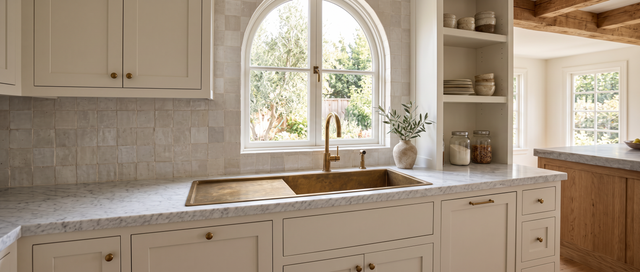
Unlacquered copper that needs nothing more than soap, water and a cloth.
Step 3: What should you never use on a copper sink?
Harsh products strip patina unevenly and leave blotchy patches that are hard to correct. Keep this table handy.
| Safe to use | Avoid |
|---|---|
| Mild dish soap | Bleach |
| Warm water | Ammonia |
| Soft cotton or microfiber cloth | Abrasive scouring pads |
| Gentle copper polish (occasionally) | Acidic cleaners |
| Natural wax | Drain cleaners left sitting in the basin |
If something harsh does splash into the sink, rinse it away right away with plenty of water.

Step 4: Do you want a polished or a patina look?
This is the only real decision. Both are correct, and you can change your mind later.
For a polished, bright finish: apply a gentle copper polish with a soft cloth, rinse, and dry well. Expect the shine to soften again over time as the metal reacts with air and water.
For an aged patina: skip the polish. Simply wipe dry after use and let the surface deepen into a rich brown. Wiping dry is all an aged finish needs.
Not sure which suits you? Our copper vs brass guide explains how each metal ages.
Step 5: When should you wax a copper sink?
Occasionally, and only if you want to. A light coat of natural wax helps even out the tone and gives the surface a soft, protective feel. Apply a thin layer with a clean cloth, let it settle, and buff gently.
Wax is optional. Many owners never use it and are perfectly happy with the result. It is a trade-off, though: wax covers the bare metal, which blocks copper's natural antimicrobial effect, as we explain in our guide on whether copper sinks are antimicrobial. If that matters to you, skip it. You can read our complete routine in the Care and Patina Guide.
How do you clean a copper sink that has turned green?
Green or blue-green marks on a copper sink are verdigris, a natural result of copper reacting with moisture, air and whatever sits on the surface. It usually shows up where water lingers: around the drain, along the rim, or under a wet sponge or a can left in the basin. It is not damage, and it does not mean the sink is failing. Here is how to deal with it:
- Wash it off first. Use warm water, a few drops of mild dish soap and a soft cloth. Fresh green spots often lift with nothing more.
- Rinse and dry completely. Rinse away all the soap and dry the spot with a clean cloth. Leftover moisture is what let it form.
- Use a gentle copper polish for stubborn spots. Apply a small amount with a soft cloth, following the product's directions, then rinse and dry. Work outward in soft strokes so the area blends with the rest of the sink, and test a small spot first.
- Do not scrub hard. Steel wool and abrasive pads scratch the surface and can leave a bright, uneven patch that stands out against the patina.
To keep it from coming back, wipe the sink dry after use, avoid leaving wet sponges, cans or acidic foods sitting in the basin, and give the drain area an extra wipe.
What are quick fixes for water spots, dull patches and film?
| What you see | Likely cause | What to do |
|---|---|---|
| Light water spots | Water left to air dry | Wash with soapy water, rinse, and dry straight away |
| Green or blue-green spots | Moisture sitting on the copper | Soap, soft cloth and dry; gentle copper polish if it stays |
| Dark, uneven patches | Normal patina developing unevenly | Leave it, or polish the whole basin for an even look |
| Cloudy or dull film | Soap or mineral residue | Rinse thoroughly, dry, and wipe again with a clean cloth |
| Fingerprints and light marks | Everyday touch | Usually nothing: they blend into the hammered texture and patina |

A hand-hammered copper square undermount, 13 x 13 to 21 x 21 in, with a brass basket strainer included.
What is the point of a copper sink?
People choose a copper sink for four reasons. It is beautiful and unlike any factory finish, especially when it is hand-hammered. It develops a patina that is unique to your kitchen, so it gets more personal over time. It is durable, because solid copper does not chip or rust the way coated sinks can, and it never needs refinishing. And copper surfaces are known for naturally reducing bacteria in laboratory studies, which is a nice bonus where you prepare food, though you should still wash the sink as normal. You can read more in our guide on whether copper sinks are antimicrobial.
The trade-off is that copper changes color and shows life, so it suits people who enjoy a living finish. If that sounds like you, browse all our hand-hammered copper sinks, compare them with the brass sinks, or see every sink we make.
Frequently asked questions
How often should I clean a copper sink?
Wash it as part of your normal dish routine and wipe it dry after use. Polishing is occasional and optional, perhaps a few times a year if you prefer a brighter look.
Will my copper sink turn green?
Most kitchen copper sinks darken toward brown. Hints of green or blue can appear in spots that stay damp, which is another reason to wipe the sink dry. See the section above on how to clean a copper sink that has turned green.
Can I use vinegar or lemon on a copper sink?
We recommend against it. Acidic cleaners can strip patina unevenly, so the sink ends up blotchy instead of bright.
Does cleaning remove the patina?
Gentle washing with mild soap does not. Harsh chemicals, abrasive pads and polish do. If you want to keep the patina, stick to soap, water and a soft cloth.
Is a copper sink hard to maintain?
No. It is one of the lower-effort sinks to own, because it never needs sealing, stripping or refinishing. Wipe it dry and enjoy how it ages.
Is a copper sink worth it?
If you want a handmade, long-lasting sink that gains character with use, yes. If you would rather have a finish that never changes, a coated sink or another metal may suit you better. Our copper farmhouse sink cost guide explains what you are paying for.
Can I use Bar Keepers Friend on a copper sink?
Not for regular cleaning. Bar Keepers Friend is built around oxalic acid and micro-abrasives, according to its own product sheet, and on an unlacquered copper sink it strips the patina and leaves bright, uneven copper. If you ever try it, test a hidden spot first, rinse thoroughly, and expect the metal to darken again over days to a couple of weeks.
Can I use Dawn or other dish soap on a copper sink?
Yes. Any mild liquid dish soap, Dawn included, with warm water and a soft cloth is the safest routine. Rinse and dry afterwards to avoid water spots, and keep to the avoid list above: bleach, ammonia and abrasive pads.
Can I use baking soda on a copper sink?
Only as a last resort for stuck-on residue. Guides disagree on baking soda: some call a paste a gentle abrasive, while others warn it can leave bright spots. Start with warm soapy water and a soft cloth, test a small spot first, and avoid scrubbing the hammered texture.
Why did my copper sink turn bright pink after cleaning?
Pink or bright orange is bare copper. A strong or acidic cleaner, or hard scrubbing, removed the patina and exposed the fresh metal underneath. It is not damage. With normal use, air and water darken it again, usually within days to a couple of weeks.
A sink that gets better with age
Hand-hammered in Fes, made to order, and easy to care for.
Shop copper sinks →Questions about care? Email hello@brassbasin.com.