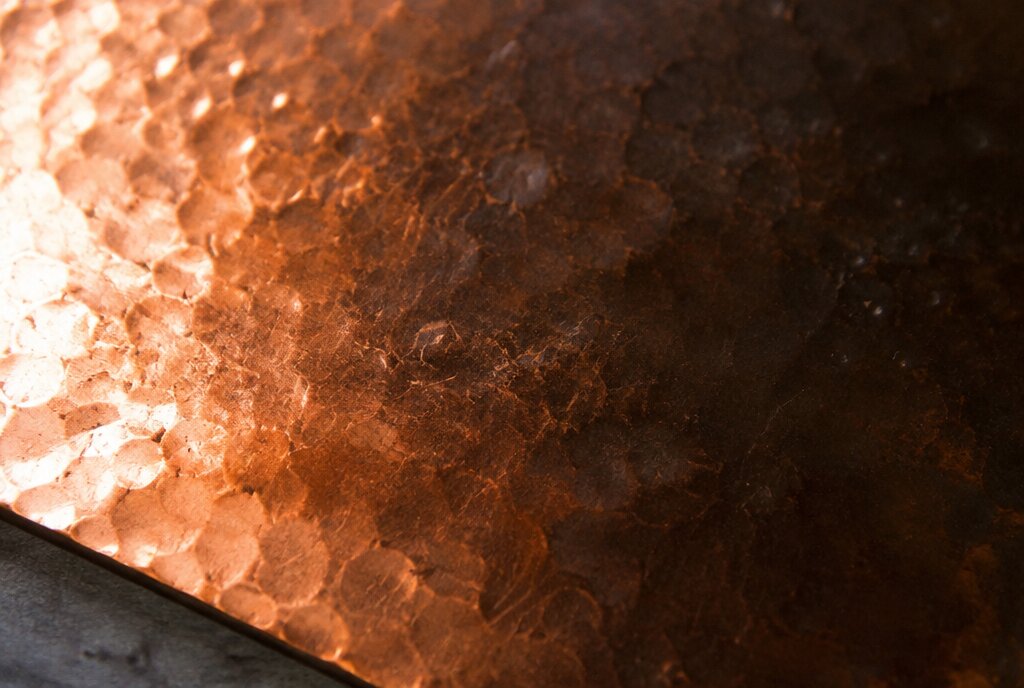
Caring for an unlacquered copper or brass sink is simple: wash it with mild soap and water, wipe it dry after use, and avoid harsh chemicals and abrasive pads. The metal is alive. It reacts to water, air and touch, and that slow change into a warm patina is part of what you are buying, not a defect. If you would rather keep the color exactly as it arrived, choose a lacquered finish instead.
How do I clean a copper or brass sink every day?
- Rinse the basin and wash it with mild dish soap and a soft cloth.
- Wipe it dry after each use to prevent water spots.
- Clear food scraps and soap film regularly, since residue dulls the surface.
- Avoid bleach, ammonia, acidic cleaners and abrasive scouring pads.
For a full walkthrough, see our guides on how to clean a copper sink and how to clean a brass sink without stripping the patina.
How do I care for each finish?
| Finish | What to expect | Care |
|---|---|---|
| Polished, unlacquered | Bright metal that darkens naturally over months and years | Rinse and dry after use. Use a light copper or brass polish when you want the shine back. |
| Aged patina, unlacquered | A rich, weathered surface from day one | Wipe dry after use. Avoid abrasives and acidic cleaners, which can strip the patina unevenly. |
| Lacquered (gloss or matte) | Color stays close to how it arrived | Mild soap and a soft cloth only. Never use polish or abrasives, which can damage the lacquer. |
Polished finish
Rinse and dry after use to slow natural darkening. A light copper or brass polish restores the shine whenever you want it. If you stop polishing, the sink will slowly age into a warm patina.
Aged patina finish
Your sink arrives with a developed, weathered surface. Just wipe it dry after use. Avoid harsh abrasives and acidic cleaners, which can strip the patina in patches.
Lacquered finish
We can make sinks with a clear lacquer, in gloss or matte. Lacquer seals the metal so the color changes far less. It is the practical choice if wiping the sink down every couple of days is not realistic for you. The trade-off: you are touching the lacquer, not the bare metal.
Should I wax a copper or brass sink?
We do not recommend waxing an unlacquered sink. Wax leaves a film between your hands and the metal, and copper industry guidance says antimicrobial copper surfaces should not be waxed or otherwise coated. If you want less upkeep, a lacquered finish does that job better than wax.
How will the patina change over time?
Expect the color to shift over months and years. Copper moves toward deeper brown and rosy tones; brass warms and darkens from bright gold. Spots that see more water and handling change first, so some unevenness is normal. Curious why we leave our metals bare? Read unlacquered vs lacquered brass sinks and are copper sinks antimicrobial.
Frequently asked questions
What is the best way to clean an unlacquered copper sink?
Mild dish soap, warm water and a soft cloth, then wipe it dry. Skip bleach, ammonia and abrasive pads.
Can I use vinegar or lemon on my sink?
Acidic cleaners like vinegar and lemon can strip patina unevenly, so avoid them on an aged finish. On a polished finish, use a proper copper or brass polish instead.
Is patina a sign of damage?
No. Patina is the natural reaction of copper and brass to water, air and touch. It does not harm the metal.
Can I get my sink back to bright metal?
Yes, on an unlacquered sink. A copper or brass polish brings back the shine. Lacquered sinks should not be polished.
Which finish needs the least care?
A lacquered finish, in gloss or matte. It changes color far less than unlacquered metal and only needs mild soap and a soft cloth.